Blog Entry
An entry from the community blog
Why Ritual Matters More Than Punishment in Femdom Fiction
When I write power exchange, the charge rarely comes from severity alone. It comes from repetition, anticipation, and the small chosen acts that turn desire into a world.
When people talk about femdom fiction, punishment often gets treated as the main event. How severe is it? What implement is used? How far does the submissive character go?
Those questions can matter. But when I am writing power exchange, punishment is rarely the thing that holds my attention longest. Ritual is.
A punishment is an event. A ritual is an architecture.
It tells the characters where to stand, what to call each other, which gestures carry meaning, and what happens before anyone is touched. It creates anticipation. More importantly, it changes an isolated act into part of a relationship.
The charge begins before the scene
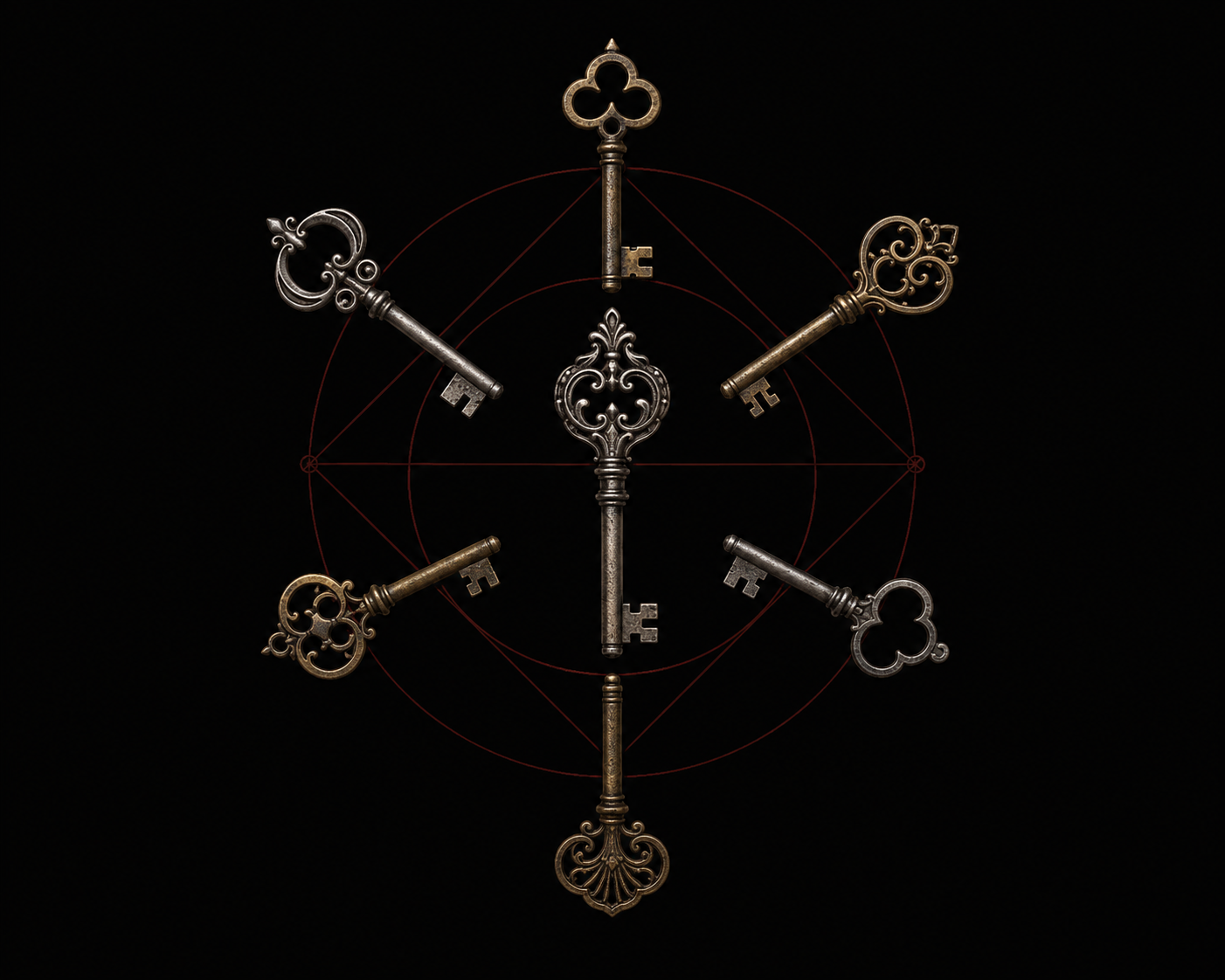
I am fascinated by the moment a familiar action stops being ordinary. A key placed on a table can be nothing. The same key, placed there at the same hour every evening, can become a promise, a warning, or an invitation. A particular chair, a repeated phrase, a door that is entered only after permission: none of these things needs to be violent to carry power.
Repetition teaches the reader how to feel about an object or gesture. The first time, it is information. The third time, it is expectation. By the tenth, it may feel inevitable.
That inevitability is one of the deepest pleasures of ritual in fiction. The reader learns the rule alongside the submissive character. Eventually, both begin anticipating its return.
Ritual gives authority a voice
I also use ritual to make dominant characters distinct from one another. Authority should not feel like a costume that any character can put on. One woman may be formal and exacting. Another may use warmth so deliberately that kindness itself becomes a method of control. Another may barely raise her voice because everyone in the room already understands the consequences of disappointing her.
The rituals they create reveal what they value. Precision. Patience. Performance. Honesty. Devotion. Control.
This matters to me because the most compelling dominance is not simply a collection of orders. It is a worldview. A dominant character should change the atmosphere of the room before she changes anyone's posture.
Consent becomes visible through pattern
Ritual is also one of the clearest ways I know to write consent without stopping the story for a lecture. Chosen submission is not made believable by saying the word consensual once. It becomes believable through patterns of attention: the established signal, the remembered limit, the moment hesitation is noticed, the rule that can be invoked, and the trust created when those things are honored.
That does not make the fantasy less dangerous. It makes the danger legible.
In dark erotic fiction, I want the reader to feel pressure, uncertainty, and the unsettling pleasure of surrender. But I also want the emotional logic to hold. Ritual lets a story approach the edge while showing that the characters know where the edge is—and what it means to cross or refuse it.
Transformation needs repetition
The deeper reason I return to ritual is that transformation almost never happens in one dramatic instant. It happens through small acts performed again and again until they begin to alter identity.
A title is used until it feels natural. A posture is corrected until the body remembers. A key is surrendered until possession of it means something different. The character may begin by performing obedience and discover, much later, that the performance has become desire.
That is where ritual becomes more powerful than punishment for me. Punishment can change behavior in a scene. Ritual can change the meaning a character gives to the behavior—and therefore the person the character believes himself to be.
When a power-exchange story stays with me, it is usually not because of the harshest moment. It is because the author made some small gesture feel unavoidable. A word. A threshold. A practiced silence. The sensation that the characters have entered a pattern larger than either of them, and that they keep choosing to return to it.
That is the atmosphere I am always trying to write: not dominance as spectacle, but desire given structure.
For readers and writers: which carries more power for you—the intensity of a single scene, or the ritual that makes you anticipate it?
5 likes - Published 2 months ago - Fet Library Journal

Comments (0)
Be the first to leave a comment.